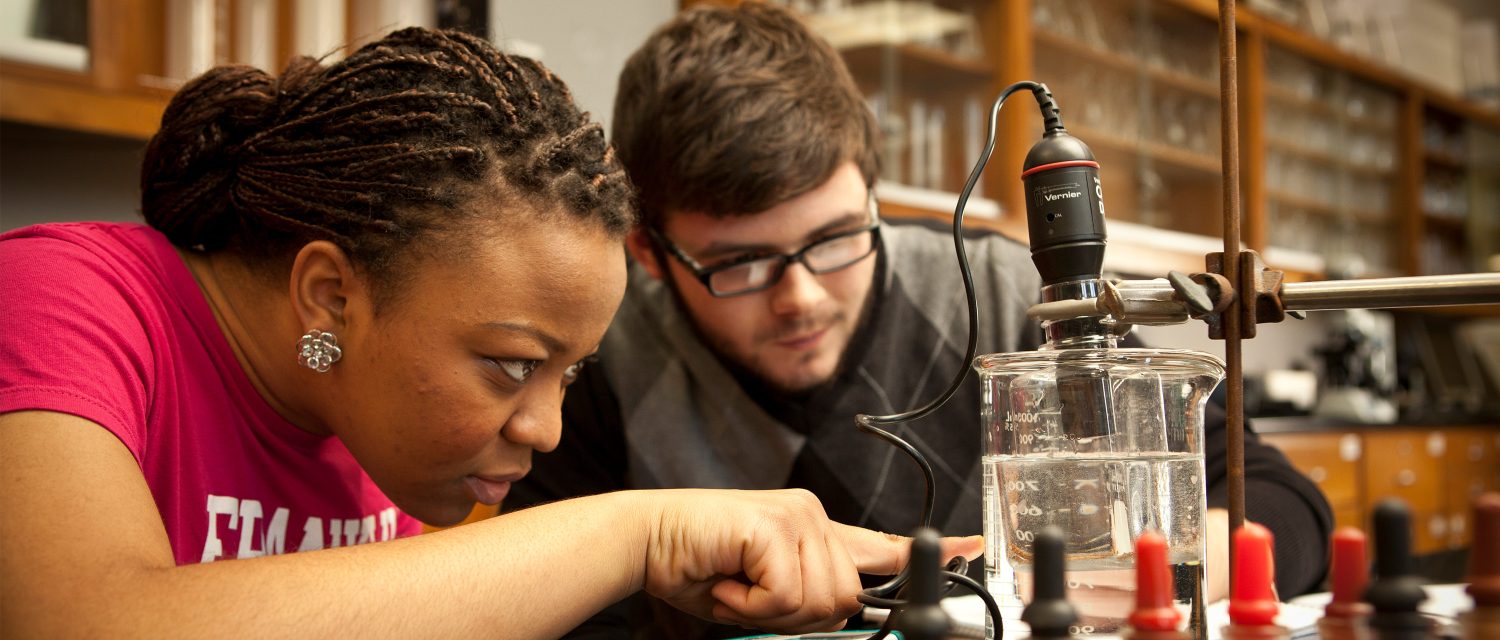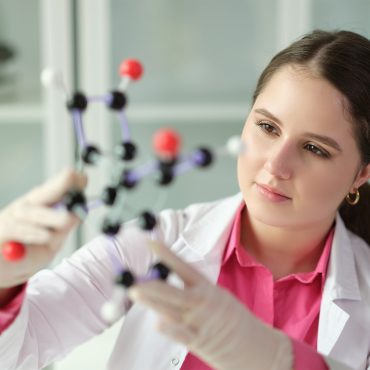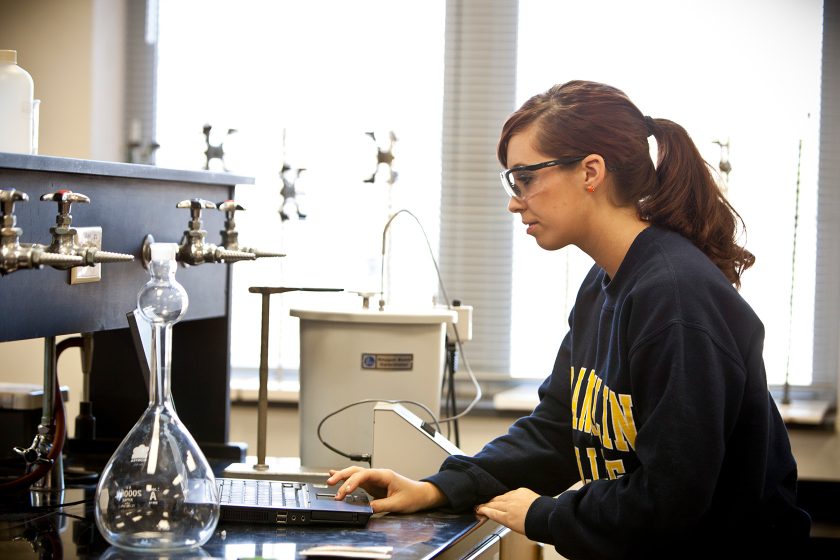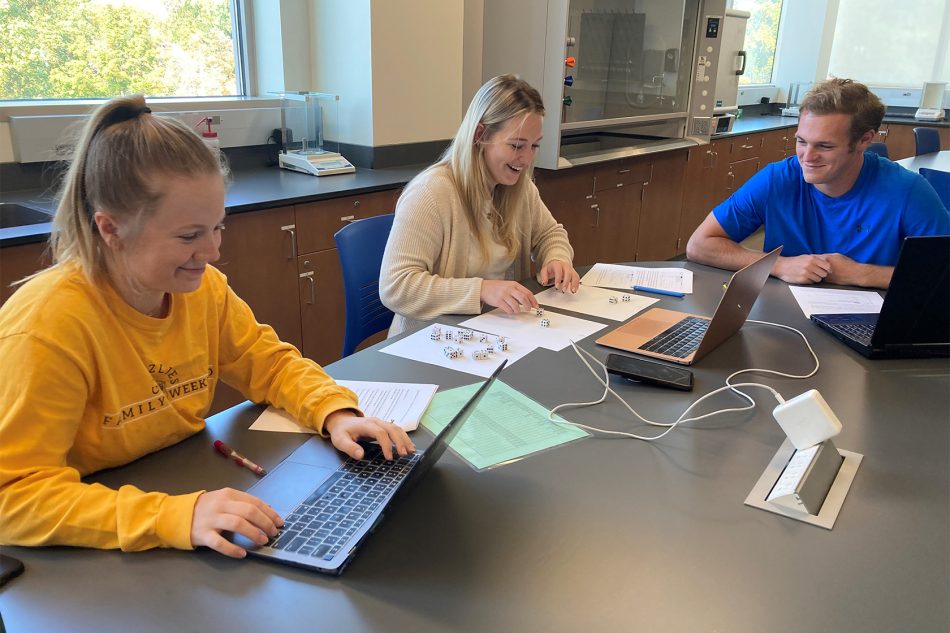

While pursuing an interest in chemistry or physics, you will work one-on-one with dedicated faculty advocates who provide hands-on instruction to help you solidify your interests, understand various concepts, develop analytical skills, and foster technological skills that are essential to pursuing a variety of careers after graduation.
Students utilize technologically up-to-date labs equipped with a variety of instrumentation:
- A nuclear magnetic resonance (NMR) spectrometer
- Gas chromatography-mass spectrometers (GCMS)
- High pressure liquid chromatography (HPLC) systems
- Atomic absorption spectrometers (AAS)
- Infrared (IR) spectrometers
- A UV-visible spectrophotometer
- A synthesis microwave
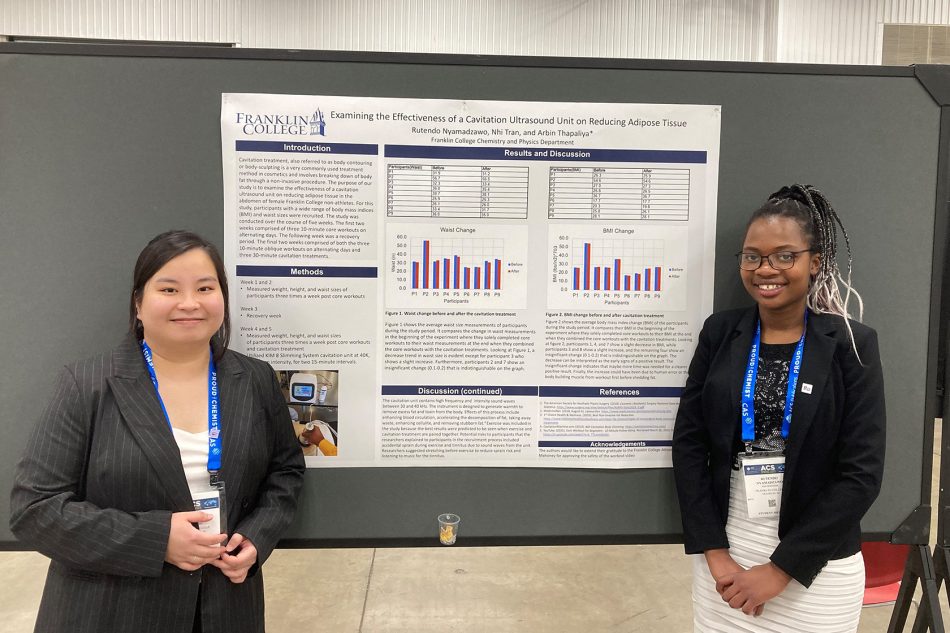
- Ultrasound equipment
Special Programs
While on campus, students can also get involved in the chemistry student club, Gender Minorities in STEM club, the earth science club, and national scientific honor societies that will help them connect with other students with similar interests, make new friends, and gain leadership experience.
Career ready
The Franklin College Department of Chemistry and Physics prepares students to pursue careers in industries, academia, health professions, science-related public services, law and more.
The Department has a 98% job or graduate/professional school placement rate.
Students gain knowledge and professional skills through engaging courses, on-campus labs and research trainings, professional internships, and off-campus summer research opportunities — all of which prepare them to evaluate critically and become informed citizens.
Career possibilities include:
- Professional programs (pharmacy, medicine, physician assistant program, veterinary science, dentistry, optometry, etc.)
- Industry jobs (especially pharmaceutical companies like Eli Lilly and others)
- Graduate school (doctorate and master’s programs)
- Forensic science-related jobs (such as at Indiana Drug Enforcement Section)
- Patent and environmental lawyer
Students work alongside faculty mentors on diverse and interdisciplinary research topics. Some of these research topics include organic synthesis, biofuel developments, applications of laser-induced fluorescence techniques, biomedical physics and ultrasounds, computational data processing/analysis and chemistry-related programming. Working on research projects helps prepare students for excellence whether they are planning to go directly into the workforce or pursue an advanced or professional degree after graduation.
Student Learning Outcomes
Through various courses (Analytical Chemistry, Organic Chemistry, Inorganic Chemistry, Physical Chemistry, Instrumental Analysis etc.) offered in the chemistry & physics program, students learn:
- The fundamental chemistry knowledge
- The ability to communicate science with professionals and with the public
- The ability to analyze scientific data and extract significant conclusions
- The ability to utilize computer programs to solve problems
- The ability to synthesize chemicals and characterize them
- The ability to design experimental plans for chemical/physical research
Through courses related to health and medicine (Biochemistry, Biotechnology, Toxicology, Ultrasonography, Radiation and Health, and Biomedical Optics) students learn:
- The fundamental chemistry and physics knowledge related to health profession
- To understand the collaboration between the fields of science and medicine
Through science courses designed for non-science majors (Astronomy, Earth Science, General Chemistry and General Physics) students get introduced to:
- Scientific concepts
- The process of scientific thinking
- How science is a creative process of discovery
- How science is conducted